

What is the APA Group pipeline expansion programme?
APA Group, Australia's largest natural gas infrastructure business, has outlined a programme of pipeline expansion and enhancement projects across the east coast gas transmission network, designed to support energy security during the transition to renewable energy. The investments form part of APA's broader strategy to maintain gas infrastructure capacity while progressively integrating renewable gas and hydrogen-ready infrastructure into its network.
What are the operational scope and market dynamics?
The strategic initiative represents a significant commitment to maintaining the reliability of critical energy delivery systems. As the energy sector navigates the complex transition toward lower-carbon sources, the management of existing transmission assets requires careful balancing between immediate operational demands and long-term future-proofing.
Projects of this nature undergo rigorous technical evaluation to ensure that capital expenditure aligns with demand forecasts provided by market regulators. The lifecycle of these developments typically progresses from initial feasibility studies through to front-end engineering design, regulatory approval, procurement, construction, and final commissioning.
Each stage requires precise project management to ensure safety standards are maintained across diverse terrain and operational environments.
What are the key projects?
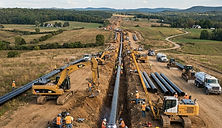
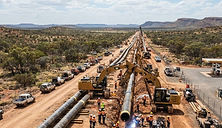
APA is progressing capacity enhancements on the Eastern Gas Pipeline, which transports gas from Victoria's Gippsland Basin to New South Wales and the ACT. The expansion involves additional compressor stations and loop pipelines to increase throughput capacity.
The implementation of compressor stations requires intricate engineering to manage pressure differentials and flow dynamics, while looping projects involve laying parallel pipeline sections to bypass existing bottlenecks. Such enhancements are essential for optimizing throughput as market demand fluctuates across the eastern seaboard.
New pipeline infrastructure is being developed to connect emerging gas supply from the Otway Basin and prospective onshore gas resources in southwest Victoria to the existing transmission network. Integrating new supply sources necessitates not only pipeline construction but also the installation of sophisticated metering and regulation stations.
These facilities ensure that gas entering the network meets the stringent specifications required for downstream transport and distribution. Capacity upgrades on the Queensland Gas Pipeline are being delivered to support increased gas-fired power generation in the state, which serves as a key peaking and firming resource for the National Electricity Market.
These upgrades are vital during periods of high demand where intermittent energy supply requires immediate backup. By enhancing flow rates, these projects improve the responsiveness of the grid to peak load requirements.
What are the procurement opportunities?
The pipeline expansion programme generates procurement demand across: Line pipe manufacturing: Large-diameter steel pipe (API 5L X70 grade). Pipeline construction: Welding, trenching, backfilling, and hydrotesting. Compressor station equipment: Gas turbines, electric motors, compressors.
Valves and fittings: Large-bore valves, pig launching and receiving facilities. SCADA and control systems: Pipeline monitoring and control. Civil works: Right-of-way preparation, river and road crossings.
The procurement process for these categories follows established industry standards for quality assurance and material certification. Suppliers must typically demonstrate adherence to safety protocols and technical specifications before being considered for complex construction tasks or the supply of long-lead equipment.
Managing supply chain logistics remains a primary focus for project teams, particularly regarding the timely arrival of critical components like high-grade steel and advanced control systems.
What is the strategic context?
The Australian Energy Market Operator (AEMO) has consistently identified gas infrastructure as critical for maintaining energy security during the transition. Gas-fired generation provides essential peaking and firming capacity to complement variable renewable energy sources.
APA's investments align with the Australian Government's Gas-Fired Recovery plan and the AEMO Integrated System Plan, both of which emphasise the role of gas infrastructure in supporting the energy transition. The company has also indicated that new pipeline infrastructure will be designed to be hydrogen-ready where feasible, supporting future blending of renewable hydrogen into the gas network as production scales.
These investments are scrutinized by stakeholders who monitor the physical integrity of the network and its readiness to accommodate future fuel mixes. The verification of capacity increases is achieved through standardized performance testing and monitoring protocols, ensuring the infrastructure operates within its design parameters while maintaining compliance with all relevant environmental and safety regulations.
As the sector evolves, the focus remains on ensuring that current energy needs are met while laying the groundwork for the potential transport of alternative energy carriers. Project Atlas tracks stainless steel fabricator across every stage of the industrial lifecycle, from announcement to operations. See Pipelines projects for related project and procurement intelligence.
Scope packages of this type, including stainless steel fabricator, are typically delivered by specialist fabrication suppliers. See specialist industrial fabrication capability for the kind of work involved.