
GAIL (India) Limited is actively procuring services and materials for the capacity expansion of the Jamnagar-Loni Pipeline and other critical infrastructure projects across India. These developments follow the recent regulatory approval of a 1,800-km LPG pipeline network expansion.
Pipeline Capacity Expansion and Procurement
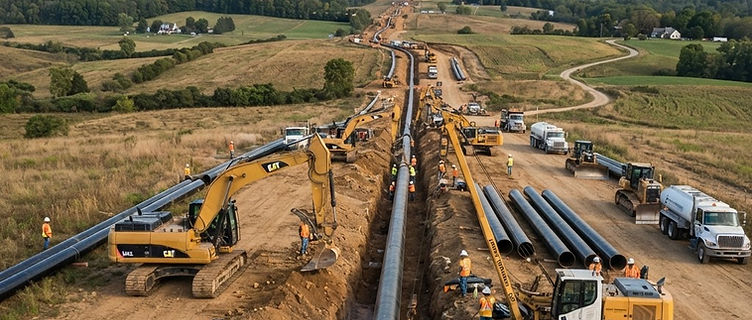
GAIL (India) Limited is currently in the active procurement phase for several critical infrastructure projects, most notably the capacity expansion of the Jamnagar-Loni Pipeline (JLPL). As of November 2026, the company has issued multiple tenders for laying and associated works, as well as the procurement of specialized components such as check valves and flanges required for the project's augmentation. These efforts are part of a broader strategy to enhance the throughput and operational efficiency of India's natural gas and LPG distribution network. The procurement phase is a decisive period for large-scale energy infrastructure, as it bridges the gap between conceptual design and physical implementation. During this lifecycle stage, project teams prioritize the securing of long-lead items and the selection of qualified contractors capable of executing complex technical work. For stakeholders, this period serves as a critical indicator of a project's readiness for site mobilization. The rigorous selection of technical components ensures that the augmented pipeline network meets the stringent pressure and flow requirements necessary for sustained reliability. The oversight of these tender processes by the company management reflects a standard approach to managing risk and ensuring that technical specifications are met before the commencement of high-value construction work.
Strategic LPG Network Growth
These procurement activities align with the broader expansion of India's energy infrastructure. In August 2026, the Petroleum and Natural Gas Regulatory Board (PNGRB) authorized GAIL to develop three major LPG pipeline projects spanning six states: Telangana, Maharashtra, Uttar Pradesh, Uttarakhand, Karnataka, and Goa. These projects, which include the 556-km Cherlapally-Nagpur line, the 611-km Jhansi-Sitarganj line, and the 633-km Shikrapur-Goa-Hubli line, are expected to increase India's common-carrier LPG pipeline network by approximately 23.5%, reaching nearly 9,500 km. The initiative is designed to improve fuel supply resilience and reduce reliance on road-based transport for imported LPG. Securing regulatory authorization is a foundational step in the lifecycle of interstate energy projects, as it requires careful coordination between federal and state authorities. As these projects move toward execution, industry observers monitor the progress of route surveys, land acquisition, and environmental clearance milestones. The complexity of managing lines that cross multiple state jurisdictions requires detailed project management plans. The timing of this infrastructure rollout is strategic, focusing on the integration of critical LPG supply corridors to support nationwide demand. By expanding the network, the project aim is to shift the logistical load from road-based transport to high-capacity pipelines, which typically provide a more stable and efficient delivery mechanism for energy products across diverse geographic terrains.
Ongoing Operational Maintenance and Technology Integration
Beyond capacity expansion, GAIL is executing a series of maintenance and technology-focused tenders to ensure the integrity of its existing assets. Recent tender activity includes the hiring of services for inline inspection (intelligent pigging) of pipeline sections, the installation of pipeline intrusion detection systems in the Maharashtra region, and the procurement of pipeline locators. Additionally, the company is investing in civil works and safety infrastructure, such as fire water sprinkler systems and rain protection sheds, across various compressor stations and terminals to maintain high operational safety standards. These projects are being managed through various e-procurement channels, including the Government e-Marketplace (GeM) and GAIL's internal tender portal. The inclusion of technology-based asset management, such as intelligent pigging and automated intrusion detection, highlights an industry-wide transition toward digitized infrastructure oversight. These maintenance cycles are critical for verifying the physical integrity of buried assets and ensuring that safety protocols remain aligned with evolving operational standards. EPC teams and asset owners monitor these procurement milestones to ensure that specialized services are integrated without disrupting existing operations. The systematic use of e-procurement platforms for both maintenance services and capital projects indicates a standardized approach to contract administration, ensuring transparency and accountability in the tender process. Ultimately, the integration of new technology alongside traditional civil infrastructure upgrades allows for the modernization of the entire distribution system, ensuring long-term operational viability and safety throughout the lifecycle of the assets.
Project Atlas tracks steel tanks fabricator across every stage of the industrial lifecycle, from announcement to operations. See live tenders and procurement opportunities for related project and procurement intelligence. Scope packages of this type, including steel tanks fabricator, are typically delivered by specialist fabrication suppliers. See specialist industrial fabrication capability for the kind of work involved.
