
What is the procurement and manufacturing scope?
The Western Australian government has officially committed $15 million in funding to ASX-listed Australian Vanadium Limited (AVL) to establish a high-capacity, relocatable vanadium electrolyte manufacturing facility. This investment, awarded through Round 2 of the Investment Attraction Fund (IAF) New Energies Industries stream, aims to bolster the state's local content in the vanadium redox flow battery (VRFB) supply chain.
By utilizing a modular design, the proposed facility is intended to be deployed across various regional and industrial centers in Western Australia, providing a flexible solution for the growing demand for long-duration energy storage infrastructure. This development represents a significant step in the state's strategy to position itself as a leader in advanced manufacturing and renewable energy technologies.
The commitment of this funding marks a shift toward operationalizing critical mineral downstream processing, moving beyond extraction to high-value manufacturing. From a project lifecycle perspective, the announcement signals that the project has transitioned from conceptual design into the initial planning and feasibility execution phase.
This milestone necessitates a rigorous assessment of technical specifications, as the facility must adhere to strict chemical handling and safety standards before it can be deployed within industrial or regional centers.
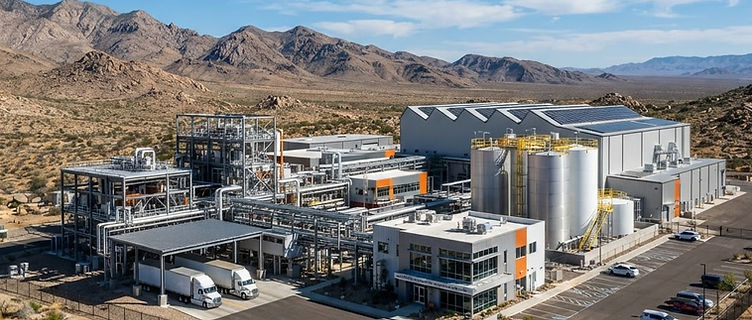
The project scope centers on the construction and operation of a modular electrolyte manufacturing plant capable of supporting grid-scale battery installations. While specific site locations, production capacities, and construction timelines have not yet been finalized, the facility is designed to be relocatable, allowing it to serve different industrial hubs as required. The procurement process will involve sourcing chemical processing equipment, engineering services, and specialized construction expertise to assemble the modular units. As the project progresses, stakeholders can track these requirements through a project intelligence platform to identify opportunities for local suppliers and engineering firms. The facility will also integrate with existing supply chains to ensure that locally sourced and processed vanadium is utilized, thereby meeting the state's requirements for increased local content in energy projects. The modular nature of the infrastructure introduces specific procurement challenges, primarily centered on the logistics of transporting high-volume chemical processing equipment. For engineering teams, the primary focus will be on the design for modularity, which requires precision engineering to ensure that units can be decommissioned, moved, and re-commissioned at different sites without compromising the integrity of the chemical processing systems. Procurement managers will likely prioritize vendors capable of providing integrated systems that combine chemical storage with advanced filtration and processing machinery. ## How does this project support the broader energy transition? Vanadium electrolyte serves as the critical storage medium in VRFBs, where energy capacity is directly proportional to the volume of electrolyte supplied. By expanding local manufacturing capacity, the Western Australian government aims to reduce reliance on international supply chains and lower the costs associated with long-duration energy storage. This initiative complements other state-led efforts, such as the 50MW/500MWh vanadium flow battery energy storage system (VBESS) project in Kalgoorlie, which requires locally manufactured technology. Industry participants looking for detailed data on these regional developments can consult the industrial projects directory to understand how these infrastructure investments are interconnected. The ability to manufacture electrolyte locally is expected to provide the necessary scale to support the state's 2029 completion targets for major energy storage projects. The strategic significance of local manufacturing is underscored by the current global reliance on concentrated supply chains for critical energy minerals. By building a local electrolyte supply, Western Australia effectively hedges against global volatility in the supply of vanadium chemicals. This is particularly relevant as the 50MW/500MWh VBESS project necessitates a stable and high-volume supply of purified electrolyte to achieve its long-duration storage objectives. Verifying the production output against project milestones is critical for the state government to ensure that the $15 million investment yields tangible local capability within the required timeframe to meet the 2029 targets. ## What do owner and supplier teams need to watch next? As the project moves from the funding announcement to the implementation phase, engineering and construction teams should monitor the release of formal tender packages and site selection announcements. The project remains at the proposal stage, with funding disbursements tied to the achievement of specific development milestones. Suppliers should focus on the requirements for chemical processing and modular assembly, as these will be central to the facility's operational success. Utilizing a project intelligence platform will be essential for firms seeking to prequalify for upcoming work packages related to the plant's construction, commissioning, and ongoing operations. Future updates are expected to clarify the total capital expenditure and the specific deployment schedule for the modular units across the state's industrial landscape. For owner teams, the upcoming phases require careful management of the regulatory approval process associated with chemical manufacturing sites. Construction teams must prepare for specialized site preparation, ensuring that each potential location for the modular units meets the power, water, and waste-management infrastructure requirements. As the project moves forward, industry observers will watch for the release of initial scopes of work for the chemical processing units. For suppliers, the emphasis will likely rest on the ability to demonstrate capacity for modular assembly and specialized chemical processing, as these will serve as the primary gateways for involvement in the broader supply chain ecosystem. Establishing a clear timeline for the facility's development will be essential for aligning construction workflows with the anticipated demand from grid-scale energy storage projects, ensuring that manufacturing capacity is ready to support the state's renewable energy growth targets.