
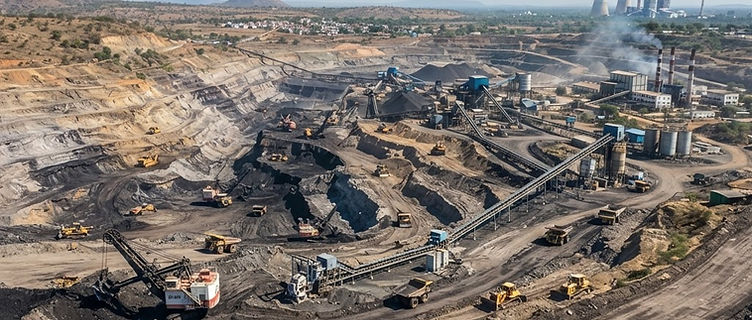
Coal India Limited (CIL) has reported a significant surge in capital expenditure during the first half of the 2026-27 financial year, reaching 7,996 crore rupees and surpassing its planned outlay by 9 percent.
This investment drive is central to the company's strategy to bolster domestic coal production capacity while simultaneously expanding its portfolio into critical minerals, coal gasification, and renewable energy sectors. As the world's largest coal producer, CIL is currently navigating a complex landscape of rising domestic power demand and a strategic shift toward technology-led industrial diversification.
Understanding the capital expenditure trajectory The reported expenditure of 7,996 crore rupees serves as a critical indicator of organizational health and operational momentum. By exceeding its planned outlay by 9 percent, the management team at CIL demonstrates an accelerated execution phase for its long-term asset development roadmap. In the lifecycle of large-scale mining operations, capital expenditure surges often correlate with the transition from engineering design to active procurement and physical site mobilization. Monitoring these spending patterns provides stakeholders with visibility into how effectively the company is absorbing capital to mitigate supply chain bottlenecks and accelerate critical path activities. The timing of this expenditure is particularly vital as the company seeks to align its infrastructure readiness with the projected peaks in national energy requirements. ## What is the procurement scope? The procurement and investment scope for CIL is broad, encompassing both traditional mining infrastructure and advanced energy technologies. During the first half of the fiscal year, the company allocated 2,152 crore rupees specifically to mine infrastructure, which includes the development of railway sidings, coal handling plants, silos, and weighbridges. These facilities are essential for efficient coal evacuation and logistics. Furthermore, the company is investing heavily in heavy earth-moving machinery (HEMM) and washeries to improve operational efficiency. For specialized components such as steelwork, piping, and pressure-related equipment, project teams often look toward specialist industrial fabrication capability to meet rigorous technical standards. The procurement of specialized pipeline components, including pig launchers for coal slurry or gasification transport systems, remains a critical requirement for these large-scale infrastructure projects. Procurement professionals recognize that the integration of such high-value infrastructure requires rigorous adherence to technical specifications to ensure long-term durability in high-throughput environments. For EPC contractors and equipment suppliers, the emphasis on railway sidings and coal handling plants indicates an ongoing priority for improving the coal evacuation chain to reduce road transport reliance and lower the overall carbon footprint per tonne. ## How is the project portfolio evolving? CIL is actively diversifying its business model across five primary platforms: coal gasification, thermal power, renewable energy, energy storage, and critical minerals. The company is pursuing a 2x800 MW ultra-supercritical power plant expansion in Jharkhand and has already commissioned approximately 550 MW of solar capacity. In the energy storage sector, CIL is developing grid-scale Battery Energy Storage Systems (BESS), including a 187.5 MW/750 MWh project in Telangana. These initiatives are supported by a new digital governance framework that utilizes standardized financial models and GIS-based opportunity mapping to track project milestones. For those tracking these developments, the interactive industrial project map provides a comprehensive view of how these diverse energy and mining assets are distributed across the region. The pivot toward ultra-supercritical power and grid-scale storage reflects a strategic response to the evolving energy trilemma: balancing affordability, energy security, and environmental sustainability. By utilizing GIS-based mapping, project managers can more effectively optimize the siting of these assets, ensuring that logistics and grid connectivity are factored into the initial feasibility studies. ## What do suppliers need to watch next? Suppliers and contractors should monitor the ongoing tender processes for CIL's diversification projects, particularly in the coal-to-chemicals and critical minerals segments. The company is currently exploring graphite mining and beneficiation in Madhya Pradesh and Chhattisgarh, alongside rare-earth opportunities in Andhra Pradesh and Maharashtra. As these projects move from the conceptual stage to feasibility and EPC procurement, there will be a sustained demand for high-capacity mining equipment and specialized process infrastructure. Engineering teams should note that the integration of coal gasification plants will require sophisticated piping networks, necessitating the procurement of high-pressure valves and pig launchers to ensure system integrity and maintenance. With CIL aiming to achieve a production milestone of 1 billion tonnes, the focus on operational readiness and supply chain efficiency will remain the primary driver for future contract awards and procurement activities throughout the remainder of the fiscal year. Success in these newer ventures will likely depend on the company's ability to forge strategic partnerships for technology transfer and process implementation. Suppliers are advised to monitor the regulatory environment regarding critical mineral exploration, as these often entail unique permitting cycles and technological requirements that differ from standard coal mining. The ability to demonstrate technical competency in niche sectors such as coal gasification and rare-earth mineral processing will be a key differentiator for firms vying for upcoming EPC and sub-contracting opportunities.