
The Delhi Jal Board has inaugurated and launched a series of water treatment and sewage infrastructure projects valued at over INR 8,900 crore to improve urban water security and river health. These developments represent a significant expansion of the capital's utility capacity through JICA-assisted and state-funded initiatives.
What is the total investment and project scope?
The Delhi Jal Board (DJB) has officially inaugurated and laid foundation stones for 43 critical water and sewerage infrastructure projects across the National Capital Territory of Delhi. With a combined investment of approximately INR 8,941.22 crore, this development marks a substantial effort to enhance the city's water supply reliability and accelerate the rejuvenation of the Yamuna River.
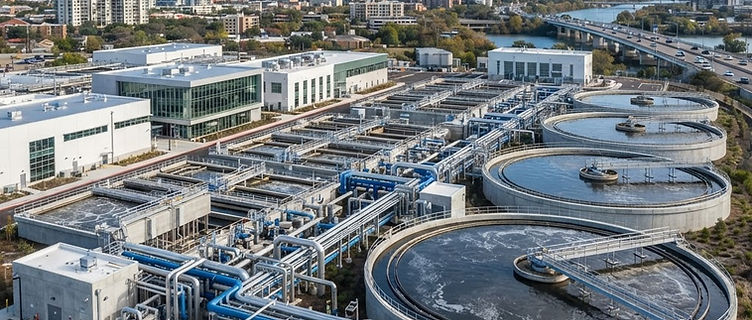
The initiative includes the commissioning of the Okhla Wastewater Treatment Plant, which at 564 million litres per day (MLD) capacity, stands as the largest facility of its kind in India. Additional components include the rehabilitation of the Rithala and Kondli sewage treatment plants, which provide 184 MLD and 205 MLD of capacity respectively, aimed at improving the quality of treated effluent discharged into the river system.
The progression of these projects represents a significant lifecycle shift from the planning and procurement phases into active execution and commissioning. For water infrastructure authorities, reaching this stage signifies the successful navigation of complex land acquisition hurdles, environmental clearances, and technical feasibility studies that typically precede large-scale civil works in dense urban environments.
The core of the recent expansion is the new 477 MLD Chandrawal Water Treatment Plant, a project developed under the Delhi Water Supply Improvement Project. This facility is designed to expand both the volume and the quality of water treatment for the city, with a specific focus on achieving continuous 24x7 water supply across the Chandrawal command area. The project involves extensive upgrades to the existing supply network, including the installation of new service connections and the integration of advanced monitoring systems to ensure equitable distribution.
As part of the broader industry coverage provided by our team, we track how these large-scale urban projects drive demand for specialized mechanical and civil engineering services. The procurement scope for such facilities often requires high-precision components, including various types of pressure vessels in Australia and other global markets that set the standard for high-pressure water treatment applications. The shift toward 24x7 supply necessitates not just the construction of treatment units, but the modernization of aging distribution grids to handle consistent hydraulic pressure without significant leakage.
What are the procurement and fabrication requirements?
The scale of the DJB projects necessitates a robust supply chain for mechanical and structural components. Contractors involved in the construction of water treatment plants and sewage facilities are frequently tasked with the procurement of complex steelwork, including tanks, piping, spools, and various industrial tank fabrication capability requirements. These components are essential for the storage and processing of treated water and wastewater.
Furthermore, the integration of advanced treatment technologies often requires the procurement of specialized equipment, such as pressure vessels in Australia, which are utilized in high-performance filtration and reverse osmosis systems. Engineering teams are currently focused on the procurement of these critical assets to ensure that the newly inaugurated plants meet stringent operational and environmental standards.
For prime contractors and EPC firms, the primary challenge lies in coordinating the delivery and installation of these capital-intensive components according to the project timeline. This requires rigorous quality assurance protocols to verify that all steelwork and pressure systems comply with international fabrication standards before they are integrated into the wider facility.
The reliance on specialized fabrication reflects the increasing technical complexity of wastewater treatment, where precision engineering is required to manage chemical dosing, sedimentation, and biological processing stages efficiently.
What are the operational milestones and future outlook?
For stakeholders, the commissioning of the Okhla plant and associated facilities represents a verification of technical design parameters against real-world influent characteristics. During the initial operational period, engineering teams typically monitor flow rates, treatment efficiency, and energy consumption to ensure that the infrastructure meets the projected outcomes outlined during the tender stage.
The transition from construction to operation is a critical period where performance bonds and contractual warranties are tested against actual plant throughput. As these plants begin sustained operations, the focus naturally turns to the maintenance of the mechanical assets, particularly the pumps, aeration systems, and filtration modules that are essential for long-term viability.
Looking ahead, the focus for the Delhi Jal Board and its partners will shift toward the operational performance and long-term maintenance of these facilities. While the inauguration of these plants is a major milestone, the sustained delivery of 24x7 water supply remains an objective that requires ongoing network optimization and rigorous asset management. Stakeholders are closely monitoring the implementation of these projects to assess their impact on urban water security and the overall health of the Yamuna River.
Future tenders are expected to emphasize performance verification, digital integration, and preventive maintenance strategies to ensure that the infrastructure remains resilient against the pressures of rapid urbanization and climate variability. Engineering firms and equipment suppliers should prepare for continued demand in the sector as the government continues to prioritize water and sanitation infrastructure under the broader framework of national development missions.
The success of these initiatives will likely influence future procurement models, potentially placing a greater emphasis on integrated operation and maintenance contracts that ensure project longevity. As the city grows, the capability of these systems to integrate with digital twin technologies and real-time monitoring platforms will define the next generation of urban water management, providing the necessary data to address systemic inefficiencies and optimize resource utilization across the entire network.
Frequently Asked Questions
Sources
- https://www.jica.go.jp/english/overseas/india/information/press/2026/1586586_70871.html
- https://megaproject.com/news/water/delhi-jal-board-launches-rs8941-22-crore-water-and-sewerage-infrastructure-projects-across-delhi
- https://www.waterintelligencebrief.com/geo-country-india-november-2026
- https://www.pib.gov.in/PressReleasePage.aspx?PRID=2290048®=3&lang=1