
The Australian Federal Government has granted environmental approval for POSCO's $3 billion green iron processing facility in Western Australia. The project aims to produce hot-briquetted iron using low-emissions technology in the Pilbara region.
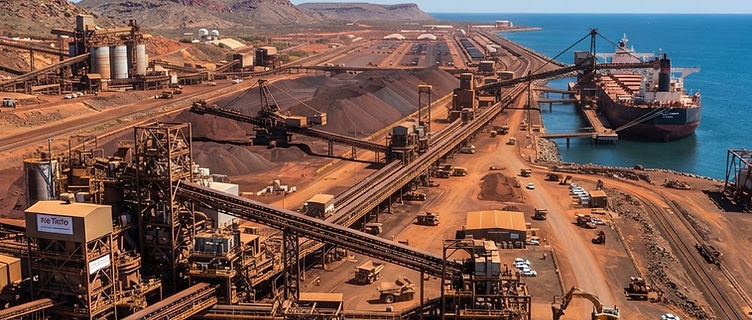
The Australian Federal Government has officially granted environmental approval for the Port Hedland green iron project, a significant industrial development led by South Korean steelmaker POSCO. Located in the Boodarie Strategic Industrial Area near Port Hedland, Western Australia, the project represents an estimated $3 billion investment in the nation's transition toward lower-emissions iron processing. The facility is designed to utilize a direct reduced iron furnace, initially powered by natural gas with plans to integrate renewable hydrogen, to produce hot-briquetted iron (HBI). Obtaining environmental approval marks a pivotal transition in the project lifecycle, moving the development from the regulatory planning and site assessment phase into the more intensive front-end engineering design and procurement preparations. This milestone is typically where federal and state-level compliance requirements intersect with the granular logistics of engineering planning, ensuring that the facility adheres to rigorous environmental safety protocols before any ground is broken at the Boodarie site.
Project Scope and Technology
The facility will employ MIDREX Flex technology, which is intended to reduce emissions intensity by approximately 50% compared to traditional coal-based processing methods. Once fully operational, the plant is expected to have an annual production capacity of 2 million metric tons of HBI and 0.7 million metric tons of export iron ore pellets. The project is currently in the development phase, with a final investment decision pending approval from POSCO's project partners, including China Steel Corporation and Japan's Marubeni Corporation. Construction is expected to generate approximately 1,600 jobs, with 400 permanent roles anticipated upon completion in 2031. For project proponents, the wait for a final investment decision often hinges on evaluating the economic viability of the transition from natural gas to hydrogen, a process that requires meticulous long-term forecasting of energy pricing and infrastructure availability. Industrial stakeholders typically monitor these developments closely, as the shift toward green iron production requires not only technological adoption but also a massive realignment of regional supply chains and energy inputs.
Infrastructure and Fabrication Requirements
As the project moves toward procurement and construction, the scale of the facility will necessitate significant industrial infrastructure, including specialized piping, pressure vessels, and structural steel components. The successful delivery of such large-scale industrial assets often relies on the technical capabilities of pipe spool fabrication capability to meet stringent engineering standards. High-quality steel fabrication Australia is essential for the assembly of complex process modules, storage tanks, and heavy-duty conveyor systems required for the Boodarie site. The project's location in the Pilbara, the heart of Australia's iron and steel industry, provides a strategic advantage for logistics and supply chain integration as the facility prepares for its next development milestones.
Technical Verification and Next Steps
The technical complexity inherent in constructing a facility of this magnitude necessitates a high degree of oversight regarding the procurement of specialized materials. Engineers and procurement managers must verify that every component, from high-pressure piping networks to structural steel frameworks, complies with the regulatory benchmarks established during the environmental approval process. In large-scale industrial projects of this nature, the procurement of steel components is rarely a singular event. Instead, it is an iterative process where project teams work with domestic and international fabrication experts to ensure that modular components are delivered in sequence with site readiness. The integration of MIDREX technology further adds to this complexity, as it requires highly specialized infrastructure that can handle the transition from conventional energy sources to future hydrogen feedstocks.
As the development cycle progresses, observers are watching for the next phase of contract tendering, which will shed light on the primary construction partners and the scope of work for localized fabrication. The emphasis on utilizing established industrial standards ensures that the facility will meet its operational targets upon completion. For a project of this scale, the timing of material procurement is critical to avoiding delays in the construction schedule, particularly when sourcing heavy-duty components that must withstand the harsh environmental conditions characteristic of the Pilbara region. Ultimately, the successful delivery of the Port Hedland facility will depend on the effective coordination of these complex infrastructure requirements as the partners move toward the final investment decision and subsequent mobilization. See procurement reference data for related project and procurement intelligence.
