

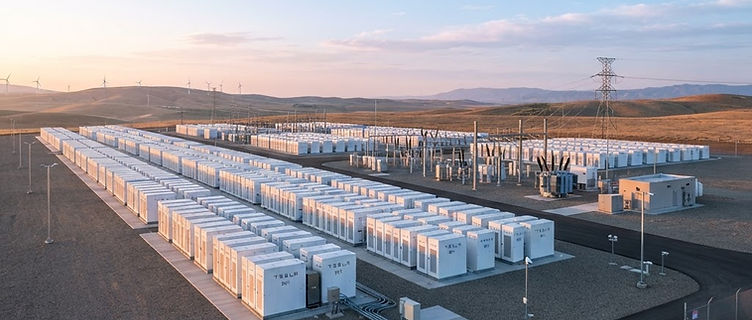
Eku Energy has officially commissioned the 250MW/500MWh Williamsdale Battery Energy Storage System in the Australian Capital Territory, marking the completion of the Big Canberra Battery project.
What are the technical specifications and grid impacts of the project?
The 250MW/500MWh Williamsdale Battery Energy Storage System (BESS) has reached commercial operation in the Australian Capital Territory (ACT), serving as the final major component of the Big Canberra Battery project. The facility, developed and owned by Eku Energy, utilizes Tesla Megapack 2 XL battery technology to support the ACT electricity network and enhance grid reliability for both the territory and neighboring New South Wales.
How was the infrastructure delivered and commissioned?
Construction of the Williamsdale BESS was executed over a two-year period, with Consolidated Power Projects serving as the balance of plant contractor. The system is integrated into the local electricity distribution infrastructure managed by Evoenergy. The project is structured as a partnership between the ACT government and Eku Energy, under which the government will provide $368 million in payments over 15 years in exchange for a 50% share of the facility's net revenue from electricity market sales.
Reaching commercial operation marks the conclusion of the commissioning phase, a critical lifecycle stage that involves rigorous testing protocols, safety certifications, and functional synchronization with the national electricity market. For asset owners and EPC contractors, this stage validates that the system meets its discharge performance metrics and response times under various grid load scenarios. This transition from construction to operations involves handover processes where control systems are fully integrated into the existing grid architecture, requiring coordination between the owner, the network service provider, and market operators. Stakeholders now shift their focus from physical installation to long-term operational monitoring, predictive maintenance of the power conversion systems, and ensuring the software management layers optimize for market opportunities.
What community and research initiatives are included?
Beyond its primary function as a grid-scale storage asset, the Big Canberra Battery project includes a community benefit sharing program titled 'Powering Big Dreams.' This initiative has provided $500,000 in funding to nine local community projects. Additionally, Eku Energy provided a $500,000 grant to the Australian National University’s (ANU) Centre for Energy Systems to conduct research into the role of utility-scale batteries and improve public understanding of energy storage technologies.
Integrating such programs into infrastructure project lifecycles reflects an evolving industry standard where social license and academic partnership are viewed as key components of project delivery. The allocation of funds to community-based energy research, particularly through university collaborations, serves to provide technical data and empirical evidence on storage performance, which helps inform future grid policy and operational strategies.
What is the strategic context for energy storage in Australia?
The commissioning of the Williamsdale BESS follows a period of significant activity in the Australian battery materials and storage sector. While the Williamsdale site focuses on grid-scale storage, other recent developments, such as the Australian Renewable Energy Agency (ARENA) supporting Clutch Industries' local manufacturing of solid-state battery packs in Victoria, highlight a broader push toward domestic battery technology development. The Williamsdale facility is expected to play a critical role in the ACT's transition toward full electrification by providing rapid-response energy storage to the national grid.
The broader landscape of the energy transition depends on projects that can balance technical reliability with the economic requirements of the national market. The implementation of utility-scale storage addresses the inherent variability of renewable energy generation, providing the firming capacity necessary to stabilize the network as coal-fired generation phases out. The timing of this commissioning is particularly relevant as the energy market continues to prioritize frequency control and ancillary services to maintain grid stability.
As operators begin to manage the dispatch profiles of the Williamsdale BESS, they will observe the capacity for the technology to respond to rapid fluctuations in wholesale prices. This capability to react to real-time signals from the National Electricity Market demonstrates the role of large-scale batteries as dynamic assets, which must be carefully managed to balance lifecycle degradation with potential revenue extraction through arbitrage. The maturity of these systems is indicative of the progress made in integrating advanced energy management software, which is now an essential component for large-scale energy storage projects looking to maximize both efficiency and reliability within the evolving regulatory and market frameworks that define the current Australian energy landscape.
Project Atlas tracks pressure vessels in Australia across every stage of the industrial lifecycle, from announcement to operations. See the industrial projects directory for related project and procurement intelligence. Scope packages of this type, including pressure vessels in Australia, are typically delivered by specialist fabrication suppliers. See pig launcher and receiver fabrication capability for the kind of work involved.
Frequently Asked Questions
Sources
- https://esdnews.com.au/big-canberra-battery-fully-commissioned-and-operational
- https://www.pv-magazine-australia.com/2026/11/05/eku-energy-200-mw-500-mwh-williamsdale-bess-starts-commercial-operation
- https://ua.news/en/energetika/u-kanberri-zapustili-naibilshu-sistemu-nakopichennia-energiyi-abc-news-australia
