
The oil and gas industry encompasses the exploration, development, production, processing, transport and sale of crude oil, condensate and natural gas. It spans upstream subsurface work, midstream pipelines and processing, and downstream refining and distribution, and it remains one of the largest capital-deployment sectors in the world, supplying a substantial share of global primary energy as well as feedstock for petrochemicals, fertilisers and plastics.
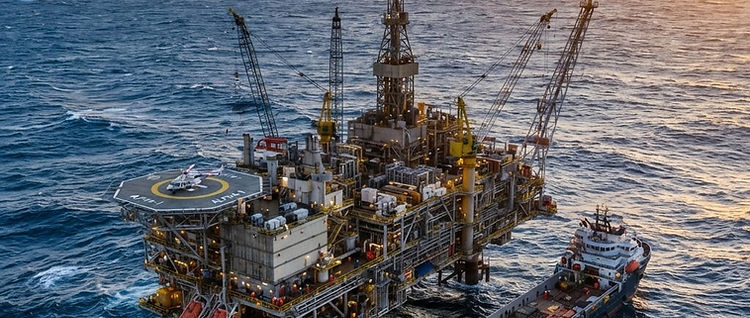
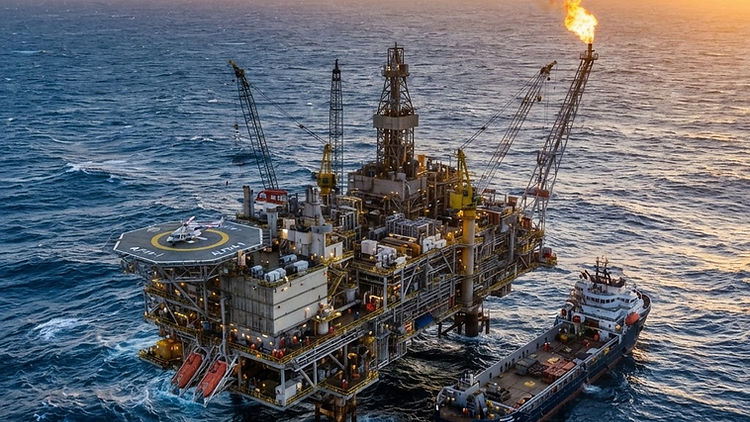
Upstream projects range from onshore conventional fields and unconventional shale developments to offshore shelf, deepwater and ultra-deepwater facilities. Development concepts include fixed platforms, floating production storage and offloading vessels, subsea tiebacks and onshore gas trains, each with a distinct engineering and procurement profile covering drilling services, wellheads, subsea hardware, topsides modules, rotating equipment and pipelines.
Recent years have seen capital discipline, portfolio high-grading and a strong focus on low-cost barrels. Deepwater developments continue offshore Brazil, Guyana, West Africa and the Eastern Mediterranean, while gas-focused projects in the Middle East and North America have expanded to serve growing LNG demand. Brownfield debottlenecking, tiebacks and infill drilling now account for a large share of new activity, reflecting producer preference for incremental projects with fast payback.
Project execution moves through exploration and appraisal, concept selection, front-end engineering design, a final investment decision, detailed design, construction, installation, commissioning and first oil or gas. FEED awards and FID are the two clearest procurement signals in the sector: FEED marks the point where engineering contractors and long-lead equipment suppliers are engaged, and FID releases the large EPC and subsea packages.
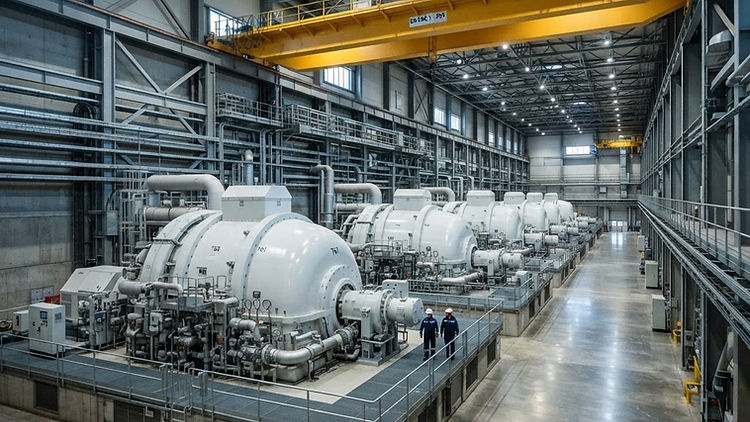
Procurement is dominated by long-lead and technically complex packages. Subsea trees, manifolds and umbilicals, high-pressure risers, gas compression and treatment trains, power generation and topside modules all require early reservation of manufacturing slots. Fabrication yards, marine installation contractors, inspection services and drilling contractors compete for work that is cyclical and highly sensitive to oil and gas price expectations.
The industry's history is one of successive technology revolutions: the rise of OPEC and the shocks of the 1970s, the opening of the North Sea, the deepwater era in the Gulf of Mexico and West Africa, and the shale revolution that turned the United States into the world's largest producer in the 2010s. Each wave reshaped contracting models, from fully integrated national oil company projects to leaner, phased developments and production-sharing arrangements.
The future is contested. Long-term demand outlooks range from plateau to decline depending on the pace of electrification and policy support, yet gas is widely treated as a transition fuel and investment continues in LNG, carbon capture and storage, low-carbon hydrogen and emissions reduction at existing assets. Flaring reduction, methane management and electrification of offshore facilities are becoming standard scope, adding new procurement categories to traditional oilfield work.

Project Atlas tracks oil and gas projects from exploration and appraisal through FEED, FID, construction and production, with contractor awards, tender activity and stage changes recorded against each project. That makes it possible to follow which assets are moving toward sanction and where engineering, fabrication and drilling packages will be released.
Field development planning links subsurface uncertainty to surface scope. Reservoir modelling and appraisal drilling determine the production profile, which drives facility capacity, pipeline diameter, compression duty and the number of development wells. Because those decisions are locked in during concept selection and FEED, the engineering phase carries disproportionate influence over the total installed cost of an upstream project.
Operating emissions are now part of the design brief. Electrification of offshore platforms from shore or from wind, waste heat recovery, flare gas recovery, vapour recovery units and methane leak detection are increasingly written into scope, and they create procurement demand in power, instrumentation and control categories that traditional oilfield suppliers did not previously serve. Regulatory disclosure requirements and buyer expectations are reinforcing that shift.
Explore Oil & Gas projects
Browse live projects, tenders and procurement activity in this sector.
View projects