

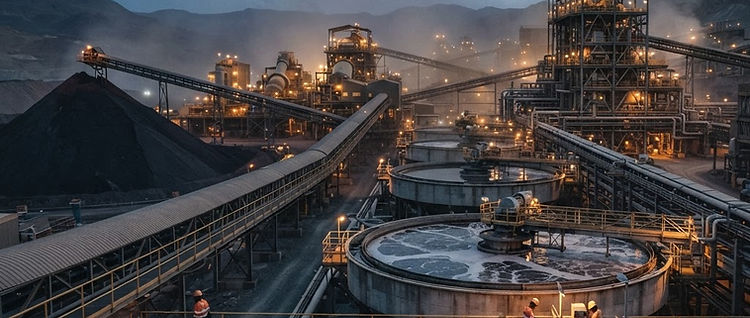
Mineral processing is the stage of the mining value chain that converts extracted ore into concentrates, metals or refined chemicals suitable for sale or further treatment. It encompasses comminution, screening, gravity and magnetic separation, flotation, leaching, solvent extraction, electrowinning, smelting and refining, and it typically accounts for the largest share of a mine's capital and operating cost.
Flowsheets are designed around ore mineralogy. Hard, abrasive ores demand high-pressure grinding rolls or autogenous mills; complex polymetallic ores require selective flotation circuits; refractory gold needs roasting, pressure oxidation or bacterial leaching; and clay-hosted deposits may use atmospheric leaching and direct solvent extraction. Each route brings its own reagent handling, tailings and environmental obligations.
Recent activity has concentrated on downstream value capture. Producers and governments have pushed to process ore domestically rather than export raw concentrate, driving new concentrators, leach plants, refineries and smelters in lithium, nickel, copper, rare earths and graphite. Lithium hydroxide and carbonate plants in Western Australia, nickel processing complexes in Indonesia and rare earth separation facilities in several regions illustrate the trend.
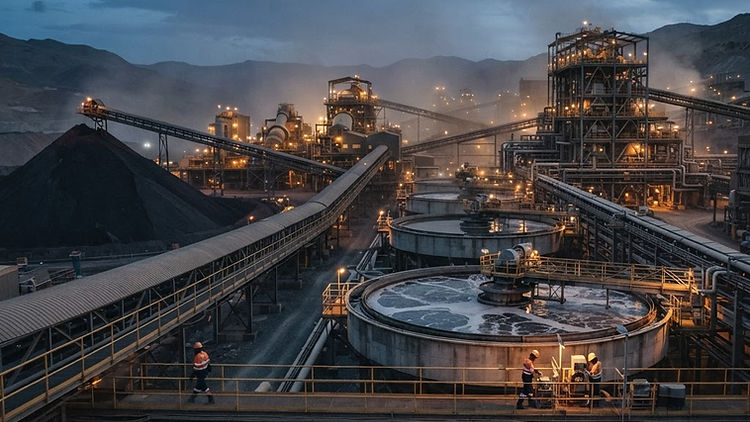
Projects progress through metallurgical testwork, flowsheet development, piloting, feasibility, permitting, engineering and construction. Testwork is the single most important de-risking step, because scale-up errors in comminution or flotation circuits are expensive to correct once concrete has been poured. Vendors of proprietary process technologies often participate directly in design and supply.
Procurement is equipment-heavy: crushers, mills, screens, cyclones, flotation cells, thickeners, filters, leach tanks, agitators, heat exchangers, pumps, valves, piping, platework, structural steel, conveyors and electrical and control systems. Refineries add crystallisers, calciners, kilns, solvent extraction mixers and electrowinning cells, frequently with stringent materials of construction.
The discipline has evolved from simple gravity and flotation circuits to complex hydrometallurgical and pyrometallurgical flowsheets, each wave driven by declining ore grades, tighter environmental standards and the economics of recovering by-products. Automation, process control and instrumentation have gradually turned processing plants into highly instrumented facilities where data quality directly affects recovery and throughput.
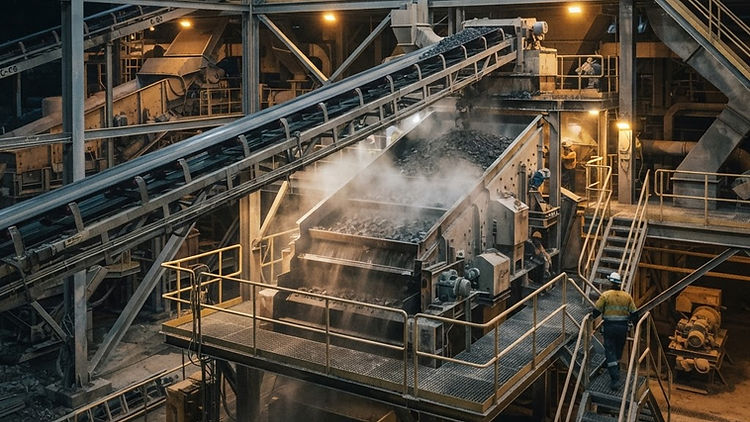
Looking ahead, water and energy efficiency, tailings reduction, dry stacking and reprocessing of old tailings are becoming central design considerations, alongside the recovery of critical by-products. Project Atlas tracks processing plants and refineries as part of their parent projects, flagging feasibility, construction and procurement milestones so suppliers can see when detailed design and package awards will occur.
Modularisation has changed how plants are delivered. Pre-assembled units for reagent mixing, filtration and piping are increasingly fabricated off site to reduce construction labour and improve quality, especially in remote locations. That shift has expanded the supplier base into fabrication yards and module assembly facilities that were not traditionally part of the processing equipment market.
Operating performance depends on data as much as equipment. Advanced process control, particle size measurement, online assay and predictive maintenance all affect recovery and throughput, and plants designed with those systems in mind typically ramp up faster. Project Atlas records processing scope within its parent projects, so suppliers can see when detailed design, procurement and construction milestones are reached.
Explore Mineral Processing projects
Browse live projects, tenders and procurement activity in this sector.
View projects