

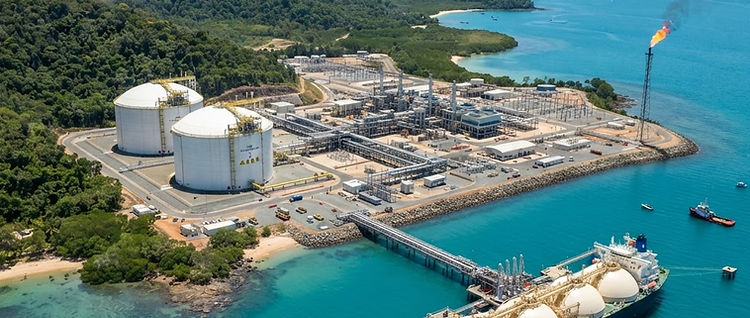
Liquefied natural gas is natural gas cooled to around minus 162 degrees Celsius, condensing into a liquid that occupies roughly one six-hundredth of its gaseous volume. That reduction makes long-distance marine transport economic, and it has turned gas from a regional pipeline commodity into a globally traded fuel linking gas-rich basins with demand centres in Asia, Europe and the Americas.
The value chain runs from upstream gas production through liquefaction trains, storage and loading terminals, specialised carriers, regasification terminals and downstream distribution. Liquefaction is the most capital-intensive link and the one that generates the largest procurement packages: compression and refrigeration trains, cryogenic heat exchangers, gas treatment, power generation, flare systems, storage tanks and marine loading arms.
Recent activity has been dominated by a wave of new liquefaction capacity in the United States, Qatar and Africa, alongside floating LNG developments that monetise stranded offshore gas. Train sizes have grown, modular construction has expanded the range of viable projects, and regasification capacity has been added in Europe and Asia to diversify supply. Each new train typically requires several years of engineering, long-lead equipment reservation and site construction before first cargo.
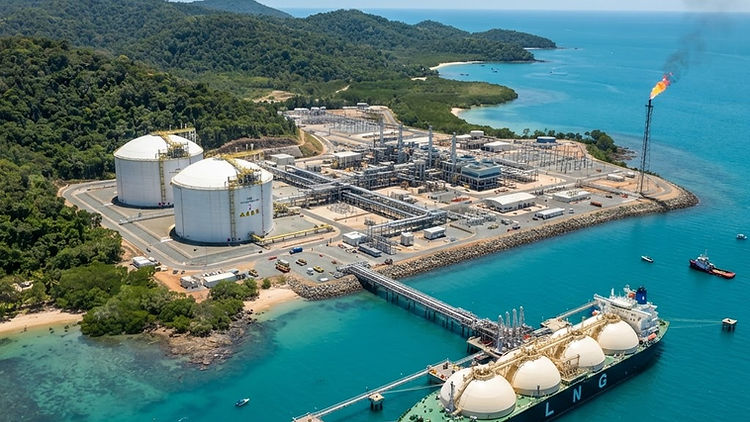
Projects move through pre-FEED, FEED, a final investment decision, detailed engineering, procurement and construction, commissioning and ramp-up. Because refrigeration compressors, cryogenic exchangers and large drivers are built by a small number of suppliers, equipment slots are reserved years ahead of FID, and the release of EPC packages for trains, tanks and marine works is one of the clearest signals that a project is advancing.
The LNG trade expanded rapidly from the 2000s as Asian demand grew and large liquefaction complexes were built in Qatar, Australia, Malaysia and later the United States. Contracting structures evolved alongside it, from long-term oil-indexed sales agreements to shorter, more flexible deals and spot trading, which in turn changed how projects are financed and how much capacity is committed before sanction.
Future prospects depend on the balance between gas demand growth in Asia and decarbonisation policy elsewhere. Carbon-neutral LNG, bio-LNG, hydrogen blending and carbon capture at liquefaction sites are being developed as ways to lower the emissions intensity of cargoes, while importers increasingly ask for verified methane and emissions data. Demand is expected to stay firm through the 2030s in most outlooks, making the timing of new final investment decisions a critical commercial question.
Project Atlas tracks LNG liquefaction, regasification and floating projects through the lifecycle, recording owners, operators, EPC contractors and stage changes. Tender activity for trains, modules, tanks, marine works and long-lead rotating equipment is flagged as projects approach sanction, so suppliers can position ahead of the main procurement wave.

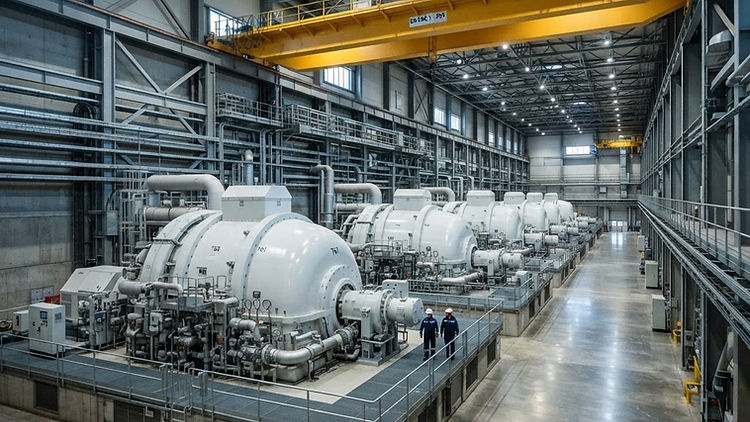
Liquefaction economics are dominated by scale and by the cost of refrigeration. Larger trains lower unit costs but concentrate risk, and the choice between single mixed refrigerant, propane pre-cooled mixed refrigerant and other licensed processes shapes the equipment list, the power demand and the emissions profile. Site conditions, ambient temperature, feed gas composition and the availability of cooling water all influence the final configuration.
Commercial structures are as important as engineering. Long-term offtake agreements underpin project finance, and the mix of contracted versus merchant capacity determines how quickly a sponsor can reach a final investment decision. Destination flexibility, tolling arrangements, shipping capacity and emissions certification increasingly appear in negotiations, and they influence the pace at which new trains are sanctioned.
Regasification and import projects follow a shorter path than liquefaction but still involve marine works, storage tanks, vaporisers, pipelines and grid or industrial connections. In Europe and Asia, floating storage and regasification units have become a fast route to additional import capacity, and several markets are adding onshore terminals to secure long-term supply.
Explore LNG projects
Browse live projects, tenders and procurement activity in this sector.
View projects