
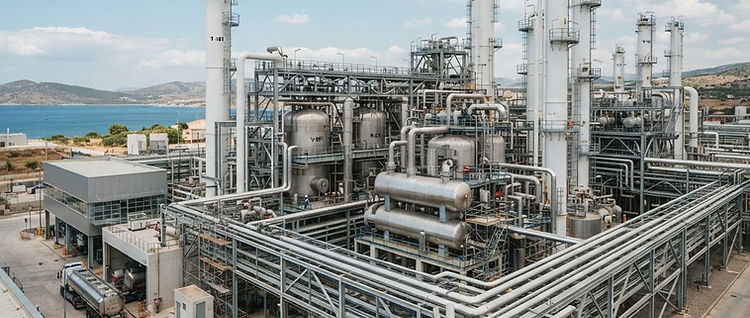
The chemical industry produces the intermediate and specialty materials that other sectors depend on, including acids, alkalis, industrial gases, fertilisers, pigments, adhesives, coatings and performance additives. Plants range from large continuous commodity units to smaller batch facilities producing high-value specialties for specific customers.
Development follows a technology-led path. Process licensors define the flowsheet, then engineering contractors translate it into a plant with defined utilities, materials of construction and safety systems. Hazard assessment, environmental permitting and product qualification frequently determine the schedule, and repeat or brownfield expansions are preferred where site infrastructure already exists.

Recent activity has focused on capacity additions in Asia and the Middle East, on fertiliser and ammonia projects tied to gas availability, and on low-carbon ammonia and hydrogen derivatives that are attracting investment as energy transition feedstocks. Efficiency upgrades, electrification and heat recovery also drive a steady stream of smaller capital projects at existing sites.
Procurement covers reactors, columns, heat exchangers, compressors, pumps, valves, storage tanks, filtration and drying equipment, piping, instrumentation and control systems. Materials selection is critical: corrosion-resistant alloys, linings and specialised seals are often required, and equipment must satisfy strict pressure, temperature and safety standards.
The sector's future is defined by decarbonisation, circularity and supply chain resilience. Electrified and hydrogen-fired process heat, carbon capture at ammonia and methanol plants, recycled feedstocks and reduced emissions intensity are reshaping project scope, while customers increasingly demand product-level carbon footprint data. Project Atlas tracks chemical and fertiliser projects through engineering, construction and start-up, flagging procurement as packages are released.
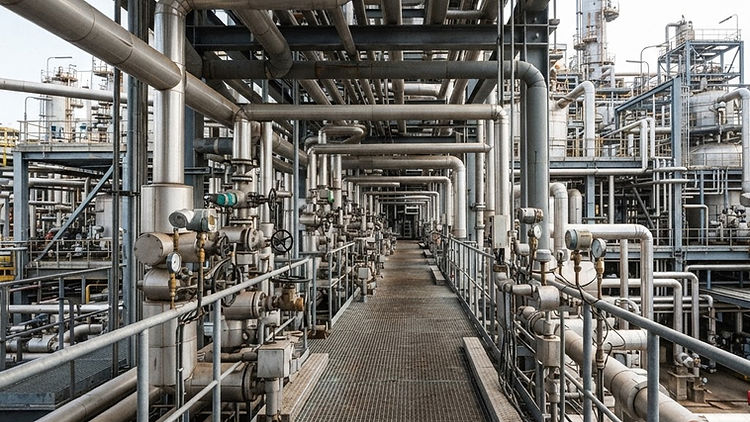
Site integration matters more than in most sectors. Chemical plants typically share utilities, storage, effluent treatment and emergency services with neighbouring facilities, so brownfield expansions can be delivered faster and cheaper than greenfield builds. That dynamic concentrates a large share of investment in established industrial clusters.
For suppliers, the sector rewards technical depth over volume. Specialised alloys, high-pressure equipment, dosing and filtration systems and process instrumentation are usually specified by licensor and confirmed by the owner, which means pre-qualification and reference plants carry significant weight. Project Atlas tracks chemical projects and their equipment packages through engineering and construction.
Product stewardship obligations follow the plant through its life. Registrations, safety data, emissions reporting and hazardous goods handling are part of operating licence conditions, and they influence storage, packaging and logistics scope. Suppliers that can document compliance and material traceability are advantaged in tenders.
Explore Chemical projects
Browse live projects, tenders and procurement activity in this sector.
View projects